
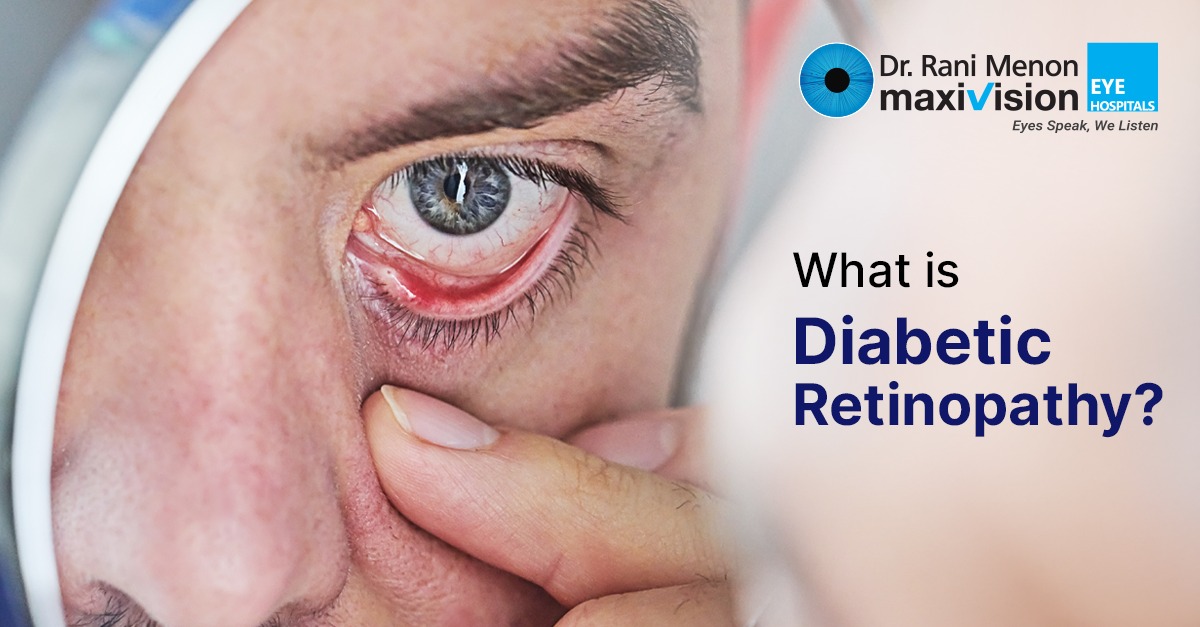
What is Diabetic Retinopathy?
Diabetic retinopathy is a condition that slowly affects your vision if you’re living with diabetes. It happens when high blood sugar levels, over time, start damaging the tiny blood vessels in the retina—the part of your eye that helps you see clearly.
At first, this damage is subtle. The vessels may weaken, leak a little fluid, or get blocked. You won’t feel it happening, and most people don’t notice anything unusual in the early stages. But inside the eye, changes are quietly progressing. As the condition advances, the eye may try to grow new blood vessels, but these are fragile and can bleed easily, affecting vision further.
That’s what makes diabetic retinopathy dangerous—it doesn’t give you early warning signs. You might feel your vision is perfectly fine while the condition is already developing. Over time, you may begin to notice blurred vision, dark spots, or difficulty seeing clearly. In severe cases, it can even lead to permanent vision loss. This is why regular eye checkups are so important, even when everything feels normal.
Treatment for Diabetic Retinopathy
Treatment for diabetic retinopathy isn’t one-size-fits-all—it depends on how early the condition is detected. In the beginning, managing your blood sugar well can go a long way in slowing things down. Keeping your blood pressure and cholesterol under control also helps protect your eyes.
When the condition progresses, doctors step in with treatments that are designed to protect your vision. Laser therapy is one of them, where targeted light is used to seal leaking blood vessels and prevent further damage. Another common treatment is anti-VEGF injections, which help reduce swelling and stop abnormal blood vessel growth inside the eye.
In more advanced cases, when there is bleeding or scar tissue affecting vision, a procedure called vitrectomy may be needed. This surgery helps clear the eye and stabilise the retina.
It’s important to understand that these treatments are not about “fixing everything overnight”. They are about controlling the condition, slowing it down, and protecting the vision you still have.
Procedure Success Rate
The good news is that modern treatments for diabetic retinopathy are quite effective—especially when the condition is caught early. Many people are able to maintain their vision and prevent it from getting worse. In some cases, there can even be noticeable improvement.
But success doesn’t depend on treatment alone. It also depends on how well diabetes is managed, how early the condition was detected, and how regularly follow-ups are done. Think of it as a team effort between you and your doctor—consistent care makes a real difference.
Even in advanced stages, surgical treatments can help improve functional vision and reduce further complications, giving patients a better quality of life.
Is the Procedure Really Necessary?
It’s completely natural to feel unsure when a doctor suggests a procedure—especially if you’re not experiencing any major symptoms. But with diabetic retinopathy, waiting can be risky.
This condition doesn’t always show clear signs early on. By the time vision problems become noticeable, the damage may already be significant. When your doctor recommends a treatment, it’s usually because they’ve spotted changes that need attention right away.
So no, these procedures aren’t optional when advised—they’re necessary steps to protect your eyesight. Acting early can help you avoid serious complications later.
Available Treatment Options
Managing diabetic retinopathy is about balance. Along with keeping your blood sugar under control, doctors may use treatments like laser therapy, eye injections, or surgery depending on how the condition is progressing. Every treatment plan is personalised, because no two eyes—or patients—are the same.
Why Choose Dr. Rani Menon Maxivision Eye Hospital?
When it comes to your vision, you want care you can trust. Dr. Rani Menon, Maxivision Eye Hospital, combines experienced specialists with advanced technology to provide accurate diagnosis and effective treatment.
With centres across Thrissur, Guruvayur, Wadakanchery, and Kunnamkulam, the focus is always on early detection, personalised care, and long-term eye health. Whether it’s a routine checkup or advanced retinal treatment, you’re in safe hands.
Your eyes won’t always warn you—but that doesn’t mean you should wait.
If you have diabetes, make eye checkups a regular habit, even if your vision feels perfectly fine today. A simple screening can make a life-changing difference.
Book your appointment at Dr. Rani Menon Maxivision Eye Hospital today.