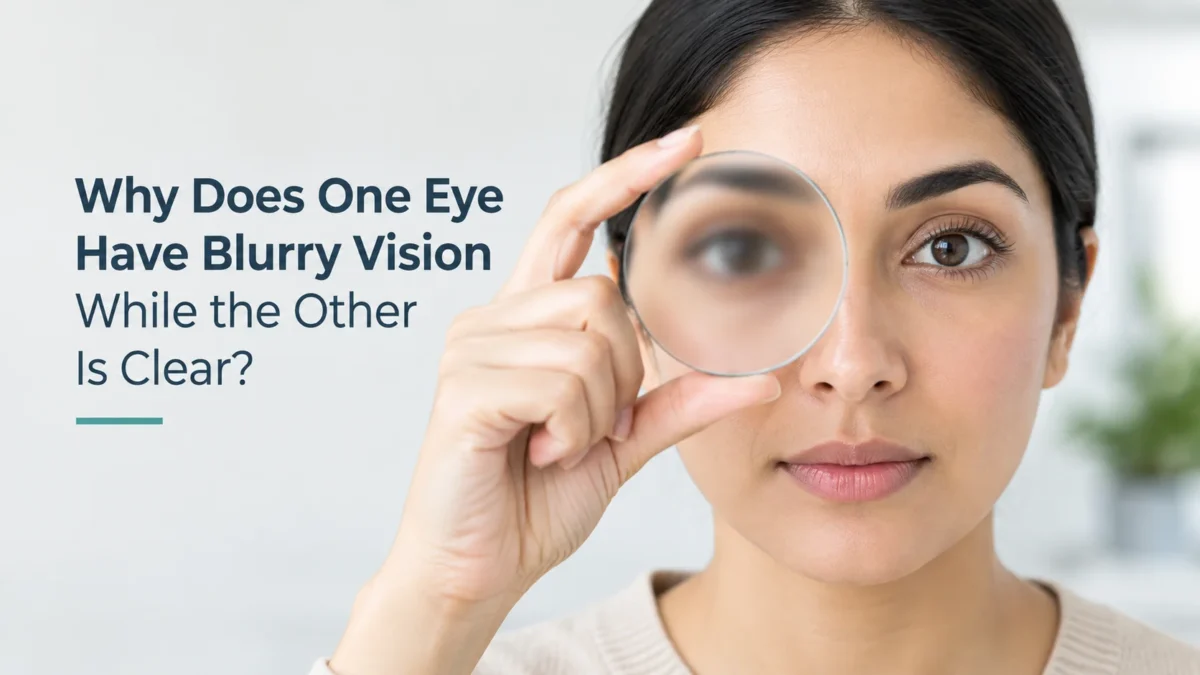
Why Does One Eye Have Blurry Vision While the Other Is Clear?
October 12, 2026
Have Any Questions?
Please contact us, if you have any queries
Categories
One eye is usually blurry while the other stays clear because the two eyes have different prescriptions. One eye may be more nearsighted, farsighted or astigmatic than the other. Other causes include a cataract in one eye, dry eye, corneal problems, glaucoma, retinal disease and a lazy eye (amblyopia).
Most people do not notice it at first. The clearer eye does most of the work, and the brain adjusts. The blur often shows up only when you cover the better eye.
Some causes are simple and are fixed with glasses. A few are serious and need quick treatment. This guide explains the common causes, the warning signs and what to do next.
Key Takeaways
- The most common reason is a different eye prescription in each eye.
- The brain favours the clearer eye, so the problem can stay hidden for years.
- Cataract, dry eye, corneal disease, glaucoma and retinal problems can also blur one eye.
- Sudden blur, flashes, a dark curtain or eye pain needs same-day care.
- In children, untreated blur in one eye can lead to a lazy eye (amblyopia).
- A full eye exam finds the cause. Most causes are treatable, especially when found early.
Table of Contents
- What Is Blurry Vision in One Eye?
- Why Is Blurry Vision in One Eye Important to Check?
- Common Causes of Blurry Vision in One Eye
- Benefits of Finding the Cause Early
- How to Find Out Why One Eye Is Blurry (Step by Step)
- Best Practices and Tips
- Common Mistakes to Avoid
- FAQs
- Conclusion
What Is Blurry Vision in One Eye?
Blurry vision in one eye means objects look hazy, soft or out of focus through one eye, while the other eye sees sharply. It can be constant or come and go. It can affect distance vision, near vision or both.
You may notice:
- Text or faces look unclear when you use one eye only
- Eye strain, headaches or squinting
- Trouble judging distance while driving or climbing stairs
- Glare or halos around lights in one eye
Why you may not notice it: Your brain combines the images from both eyes and relies on the sharper one. This hides the weaker eye’s blur in daily life. When you cover the better eye, the blur becomes obvious.
Why Is Blurry Vision in One Eye Important to Check?
A difference between your two eyes is easy to ignore, but it should not be.
- It can hide a serious condition. Glaucoma, retinal disease and cataract can start in one eye and cause little or no pain.
- It affects daily safety. Depth perception and distance judgement suffer when the eyes do not match.
- It matters most in children. When one eye stays blurry, the brain may start to ignore it. Over time this can lead to amblyopia, or lazy eye.
The National Eye Institute explains that amblyopia develops when refractive error, strabismus or cataract disrupts how the brain processes the image from one eye. Treatment works best when it starts early and usually involves patching the stronger eye or blurring it with eye drops.
Warning Signs That Need Same-Day Care
- Sudden blur or loss of vision in one eye
- Flashes of light or a sudden shower of new floaters
- A dark curtain or shadow across your vision
- Eye pain or redness along with blurred vision
- Straight lines that look bent or wavy
- Vision loss with facial droop, weakness or trouble speaking
Do not wait for a routine appointment. Visit an eye hospital or emergency care on the same day.
Common Causes of Blurry Vision in One Eye
The table below lists the most common causes and the clues that go with them.
Cause | What is happening | Clues you may notice |
Different prescription in each eye (anisometropia) | One eye is more nearsighted or farsighted than the other | Headaches, eye strain, one eye feels weaker, poor depth perception |
Astigmatism in one eye | The cornea or lens is unevenly curved, so light does not focus in one spot | Blur or shadows at all distances, squinting |
Cataract | The lens turns cloudy, often unevenly in the two eyes | Faded colours, glare, halos at night, frequent changes in glasses |
Dry eye | A poor tear film makes the surface of the eye uneven | Blur that clears on blinking, burning, gritty feeling |
Corneal problems | Scarring, infection or an irregular shape (such as keratoconus) distorts incoming light | Distorted vision, pain, redness, light sensitivity |
Glaucoma | Raised eye pressure damages the optic nerve, and one eye may be affected more | Often painless at first, with patchy or narrowing vision. A sudden attack causes pain, halos and blur |
Retinal conditions | Diabetic retinopathy, macular disease, vein blockage or retinal detachment | Wavy lines, a dark patch, flashes, new floaters, a curtain over vision |
Amblyopia (lazy eye) | The brain favours one eye from childhood, so the other does not develop full vision | Poor vision even with glasses, often found in children |
Optic nerve or nerve-related problems | Inflammation or poor blood supply to the optic nerve or the brain | Sudden vision loss, pain on eye movement, dull colours. Needs urgent care |
Benefits of Finding the Cause Early
- Protects your vision before damage becomes permanent
- Restores balance between the eyes with the right lenses
- Reduces headaches and eye strain
- Prevents lazy eye in children
- Catches silent conditions such as glaucoma and retinal disease early
- Makes driving, reading and work safer and more comfortable
How to Find Out Why One Eye Is Blurry (Step by Step)
- Note the details. Write down when the blur started, whether it came suddenly or slowly, and whether it is constant. Add any pain, redness, flashes or headaches.
- Test each eye at home. In good light, cover one eye and read a line of print, then switch. This only shows a difference. It does not show the cause.
- Book a full eye exam. Ask for a complete check of both eyes, not just a quick glasses test.
- Get each eye measured separately. The doctor checks vision and prescription in each eye to see if a prescription gap is behind the blur.
- Have the front of the eye examined. A slit-lamp exam checks the cornea, lens and tear film for cataract, dryness or surface damage.
- Check eye pressure and the retina. Pressure testing and a dilated retina exam look for glaucoma and retinal disease.
- Do extra tests if needed. Scans such as OCT, visual field testing or corneal mapping may be advised.
- Follow the treatment plan. Treatment depends on the cause. It may include glasses, contact lenses, eye drops, cataract surgery, retinal treatment, or patching for lazy eye in children.
Get Your Eyes Checked at Dr. Rani Menon Maxivision Eye Hospitals
If you are looking for the best eye hospital in Thrissur to find out why one eye is blurry, our team is here to help. Dr. Rani Menon Maxivision Eye Hospitals has provided eye care in Thrissur since 2008. We have branches in Thrissur, Guruvayur, Kunnamkulam, Angamaly and Wadakkancherry.
We offer a wide range of eye care services and treatments that follow international standards. Our doctors use advanced diagnostic methods and modern equipment to find the exact reason for your blurred vision and plan the right treatment.
Best Practices and Tips
- Get a full eye exam every one to two years. Go yearly if you have diabetes, a family history of glaucoma or are above 40.
- Wear your glasses or lenses as prescribed. Use the correct power for each eye every day.
- Check each eye separately once a month. Cover one eye at a time and note any change.
- Screen children early. Have your child’s eyes tested before school age, and sooner if you see squinting, head tilting or sitting very close to the TV.
- Control diabetes and blood pressure. Both can damage the retina.
- Replace old glasses. Your prescription can change over time.
- Keep contact lenses clean. Follow the wearing and replacement schedule.
- Protect your eyes from injury. Wear safety eyewear during sports, repair work and bike rides.
Common Mistakes to Avoid
Mistake | Why it is a problem | What to do instead |
Ignoring it because the other eye sees well | The clear eye hides the problem while the cause keeps progressing | Have both eyes tested |
Waiting for sudden blur to settle | Retinal detachment and nerve problems need urgent treatment | See an eye doctor the same day |
Buying ready-made glasses or reading glasses | They have the same power in both eyes | Get a prescription made for each eye |
Using eye drops without advice | Drops can hide symptoms, and some contain steroids that can raise eye pressure | Use drops only as prescribed |
Skipping the dilated exam | Glaucoma and retinal disease can be missed | Agree to a full exam when advised |
Delaying a child’s eye test | Lazy eye is easier to treat when found early | Test early and follow the treatment plan |
Giving up on new glasses too soon | The eyes and brain need a few days to adjust, especially with a big difference between eyes | Wear them daily and return for review if discomfort continues |
FAQs
Is it normal for one eye to be blurrier than the other?
A small difference between the two eyes is common. A new, growing or sudden difference is not normal and should be checked. An eye exam can tell whether it is a simple prescription difference or a sign of eye disease.
Why do I only notice the blur when I cover one eye?
Your brain combines the images from both eyes and relies more on the sharper one. This hides the weaker eye’s blur in daily life. Covering the better eye removes that help, so the blur becomes clear.
Can blurry vision in one eye go away on its own?
Temporary causes such as dry eye, tired eyes or a contact lens problem may settle in a day or two. If the blur lasts longer, keeps returning or comes with pain or flashes, get it checked. Sudden blur should never be left to settle.
Can glasses fix blurry vision in one eye?
Yes, when the cause is a prescription difference. Each lens is made for each eye. If the difference is large, glasses may feel odd at first, and your doctor may talk to you about contact lenses or other options. Glasses cannot fix blur caused by cataract, glaucoma or retinal disease.
Can a cataract affect only one eye?
Yes. Cataracts often develop unevenly, so one eye can become cloudy before the other. Cataract surgery restores clarity by replacing the cloudy lens with a clear artificial lens.
Can blurry vision in one eye cause lazy eye in children?
Yes. If one eye stays blurry in early childhood, the brain starts to favour the clearer eye, and the weaker eye may not develop full vision. This is called amblyopia. Glasses, patching or eye drops can help, and early treatment gives the best results.
Do screens cause blurry vision in one eye?
Screens can cause temporary blur and strain in both eyes. They do not explain a lasting difference between the two eyes. If one eye stays blurrier after rest, get a full eye exam.
When should I see an eye doctor for blurry vision in one eye?
See a doctor the same day for sudden blur, flashes, new floaters, a dark curtain, eye pain or bent lines. For slow or mild blur, book an eye exam soon, even if the other eye seems fine.
Conclusion
Blurry vision in one eye while the other is clear is common, and the cause is often a simple prescription difference. It can also point to cataract, glaucoma or retinal disease, which can progress without pain.
Do not rely on the clearer eye to cover for the weaker one. A full eye exam finds the cause, and most causes can be treated, especially when found early. If your vision has changed suddenly, seek care today.
Our team is ready to help you see clearly again.
This article is for general information and does not replace a medical examination. Please consult a qualified ophthalmologist about your eyes.