Categories
Blog

Diabetic Retinopathy in Thrissur: Symptoms, Screening & Treatment

Diabetic Retinopathy in Thrissur: Symptoms, Screening & Treatment

When we talk about diabetes complications in Kerala, diabetic retinopathy frequently tops the list. It’s actually a leading cause of preventable vision loss among adults here. With diabetes cases climbing across Thrissur and neighbouring districts, getting regular eye screening isn’t just a suggestion anymore – it’s essential.

The tricky part about this condition? It targets the tiny blood vessels in your retina and often sneaks up completely unnoticed. But don’t panic. If we catch it early through proper screening, control your blood sugar, and step in with advanced treatment, you can absolutely protect your vision and avoid the worst-case scenarios.

Table of Contents

  • What is diabetic retinopathy?
  • What are the early symptoms?
  • Who is at risk?
  • Why regular diabetic eye check-ups matter
  • What are the treatment options?
  • How can you prevent diabetic retinopathy?
  • Frequently Asked Questions

What is Diabetic Retinopathy?

Think of your retina like the film in a camera. Diabetic retinopathy happens when chronically high blood sugar levels start damaging the delicate blood vessels supplying that “film.” Eventually, these vessels might leak fluid, swell up, or even block off entirely. That’s when your vision takes a hit.

In the very beginning, you probably won’t feel or see any difference. But if left untreated, the disease steadily progresses, potentially leading to severe vision loss or total blindness.

What Are the Early Symptoms of Diabetic Retinopathy in Thrissur?

Here is the frustrating truth: diabetic retinopathy is a silent worker. A lot of people don’t realise their vision is changing until the damage is already quite advanced.

If symptoms do show up, you might notice:

  • Vision that feels blurry or keeps fluctuating day to day
  • New dark spots or “floaters” drifting across your sight
  • Struggling to see clearly at night
  • Colours looking washed out or faded
  • Sudden vision loss in the later stages

Who Is at Risk of Diabetic Retinopathy in Kerala?

Anyone living with diabetes – whether Type 1 or Type 2 – is vulnerable, especially if blood sugar levels fluctuate a lot. However, the risk jumps significantly if you:

  • Have been managing diabetes for over five years
  • Regularly struggle with high blood sugar spikes
  • Battle high blood pressure or stubborn cholesterol levels
  • Are navigating pregnancy while diabetic
  • Smoke or chew tobacco
  • Have a family history of diabetic eye issues

Kerala struggles with some of the highest diabetes rates in India. This makes routine diabetic eye screening a massive priority. We see so many patients right here in Thrissur who have early retinal changes but swear their vision is 20/20. That is exactly why ophthalmologists push for an annual retinal check-up, regardless of how well you think you can see. Early screening is your best defense.

Why Regular Diabetic Eye Check-Ups Matter

Because the disease starts so quietly, waiting for symptoms is a risky game. It surprises a lot of folks to find out their retinas are already showing wear and tear when they haven’t even needed to change their glasses prescription.

A thorough retinal examination allows your eye doctor to spot these microscopic changes years before they threaten your eyesight. For anyone living with diabetes, booking that annual eye examination isn’t just another medical chore – it’s the single most effective move you can make to keep your eyes healthy for the long haul.

What Are the Treatment Options for Diabetic Retinopathy?

How we tackle diabetic retinopathy depends entirely on what stage it is at. Catch it early? Simply locking down your blood sugar, managing your blood pressure and cholesterol, and keeping up with regular eye check-ups might be all you need to halt it in its tracks.

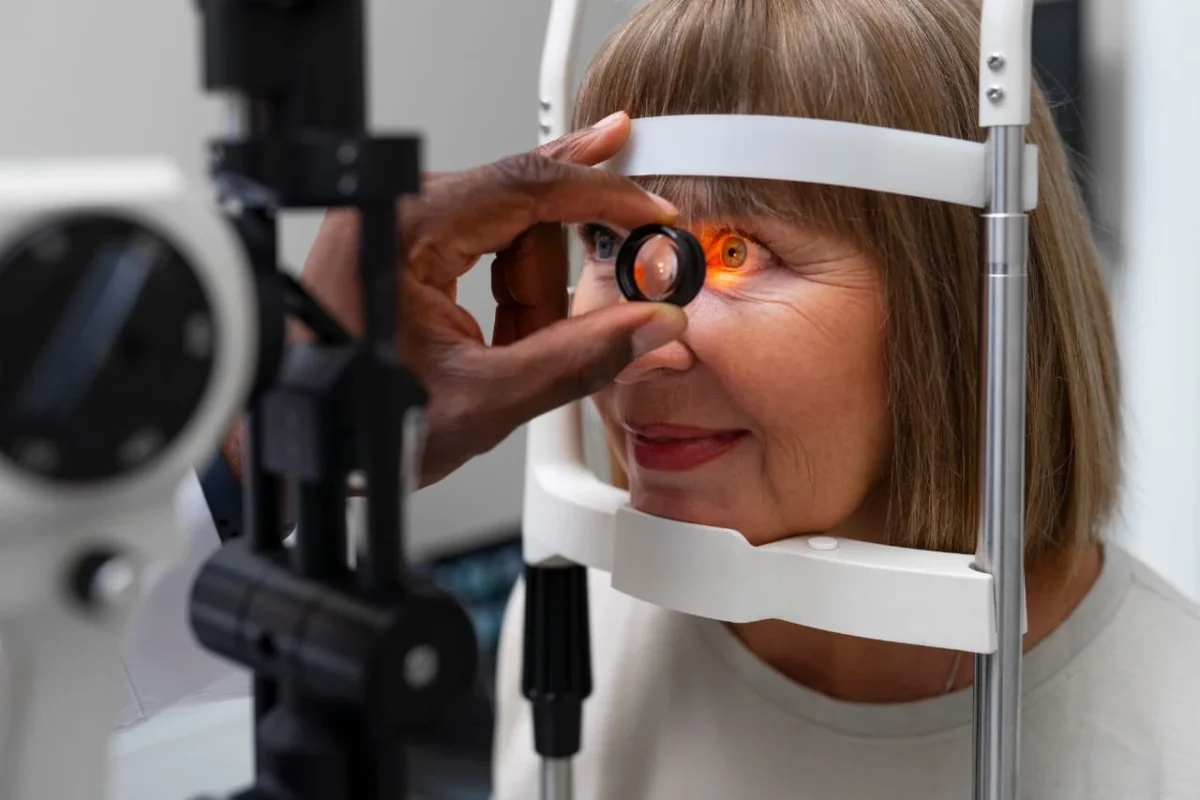
If things have progressed, your ophthalmologist might suggest more direct interventions. This could mean laser therapy, anti-VEGF injections, or steroid injections to bring down retinal swelling and guard your sight. In the most severe situations – like when bleeding occurs inside the eye or the retina starts detaching – a surgery called vitrectomy might be required. The takeaway here? With an early diagnosis, we have highly effective ways to manage this condition.

How Can You Prevent Diabetic Retinopathy?

Your daily habits are your absolute best armour against diabetic eye issues. The golden rule is keeping your diabetes firmly under control.

Focus on maintaining stable blood sugar and keeping a close eye on your blood pressure. Eating a balanced diet packed with veggies, whole grains, and antioxidants does wonders for both your body and your eyes. Don’t skip moving around, either – even a simple daily walk boosts your circulation and helps regulate your sugar levels.

If you are a smoker, this is your cue to quit. Smoking actively destroys those tiny retinal blood vessels. And, at the risk of sounding like a broken record, never skip your annual diabetic eye examination. A little bit of proactive care today secures your eyesight for tomorrow.

Frequently Asked Questions

What is the first sign of diabetic retinopathy? 

You might notice blurriness or a few floaters, though honestly, most people don’t feel a thing at first.

Can diabetic retinopathy be cured? 

We can’t completely cure it, but early treatment does a fantastic job of managing the condition and stopping further vision loss.

Is diabetic retinopathy treatment available in Thrissur? 

Absolutely. You’ll find advanced screening and all major treatments right here in Thrissur, from laser therapy to injections and vitrectomy.

How long does diabetic retinopathy treatment take? 

It varies from person to person. Some just need careful monitoring, while others might require a few treatment sessions spread out over time.

How often should diabetic patients have an eye check-up? 

Once a year is the baseline. If you already have retinopathy, your doctor will likely want to see you more frequently.

Can diabetic retinopathy cause blindness? 

Yes, if ignored, it can cause permanent blindness. Getting checked early slashes that risk dramatically.

Protect Your Vision with Expert Care

Living with diabetes just means you need to be a little more protective of your eyes. Routine retinal screening flags issues long before symptoms rear their head. If you’re looking for expert diabetic retinopathy treatment in Thrissur, schedule a consultation with Dr Rani Menon today.
Schedule a Consultation

Categories
Blog

LASIK Eye Surgery Treatment in Thrissur: What to Expect in 2026

LASIK Eye Surgery Treatment in Thrissur: What to Expect in 2026

Most people put off vision correction surgery longer than they should. Between the questions, the hesitation, and the sheer number of options available today, it is easy to delay. But for patients who have spent years managing glasses or contact lenses, LASIK eye surgery continues to be one of the most reliable and well-studied procedures in modern ophthalmology. In 2026, the technology behind it has only gotten better – more precise lasers, shorter treatment times, and outcomes that speak for themselves.

At Dr. Rani Menon Maxivision Eye Hospitals, LASIK treatment in Thrissur is tailored to each patient’s corneal profile, prescription history, and lifestyle – not a standard protocol applied uniformly to everyone who walks in.

What LASIK Actually Does

LASIK – Laser-Assisted In Situ Keratomileusis – addresses the root cause of refractive errors like nearsightedness, farsightedness, and astigmatism. Rather than compensating for how light enters the eye, the procedure corrects the corneal shape so that light focuses where it should: directly on the retina.

Here is how it works in practice. A thin flap is created on the outer corneal surface. The surgeon lifts it, applies a specialised excimer laser to reshape the tissue underneath, and places the flap back. It bonds on its own – no stitches involved. Both eyes are treated in a single sitting, usually completed in under 20 minutes. A significant number of patients report clearer vision by the following morning.

Is LASIK in Thrissur Right for You?

This is where many patients get confused – assuming that because LASIK is common, anyone can have it. That is not quite accurate. Eligibility depends on several clinical factors that only a proper examination can confirm.

Broadly speaking, suitable candidates are 

  • adults with a stable prescription for at least a year, 
  • corneas that are thick and healthy enough for the procedure, 
  • no active infections or significant dry eye disease, 
  • no systemic conditions that impair healing. 

Age matters too – patients under 18 are not considered, as the prescription may still be changing.

Pregnant or breastfeeding patients are advised to wait. Hormonal fluctuations during this period can temporarily alter the refractive prescription, which affects surgical planning and outcomes. Once the hormones stabilize and vision settles, the evaluation can be revisited.

A comprehensive pre-operative assessment at Dr. Rani Menon Maxivision Eye Hospitals is what determines, with certainty, whether you are a candidate.

The Different Types of LASIK Available in Thrissur

Not all LASIK procedures are the same, and the differences matter depending on your corneal structure and what your vision actually needs corrected.

Blade-Free LASIK – uses a femtosecond laser instead of a mechanical blade to create the corneal flap – offering more consistency and lower risk than older approaches.

Contoura Vision LASIK – is topography-guided, meaning it maps thousands of points across the corneal surface before treatment. The laser correction is then shaped around that data. Patients with irregular corneal surfaces or those who want the sharpest possible outcome tend to benefit most.

SMILE Pro – takes a different approach altogether – no flap, a much smaller incision, and a recovery that is typically faster with less post-operative dryness. It suits patients with active lifestyles or occupations that carry a higher risk of eye contact.

Wavefront-Guided LASIK – goes beyond the standard prescription to address higher-order aberrations – the kind that cause glare, halos around lights, and reduced contrast in low-light conditions. Standard glasses cannot correct these. This technique can.

After reviewing your diagnostic results, the ophthalmologist at our hospital will recommend which approach fits your case.

On the Day of Surgery

LASIK is an outpatient procedure – you come in, have it done, rest briefly, and go home the same day. Anaesthetic eye drops are applied beforehand, so the procedure itself is painless. There may be a few seconds of mild pressure during flap creation, but most patients describe the overall experience as far less intimidating than they expected.

Recovery

Improvement in vision is usually noticeable within 24 to 48 hours. Mild dryness, light sensitivity, or temporary scratchiness in the first few days is normal. Using prescribed drops on schedule, not rubbing the eyes, and attending follow-up appointments at Dr. Rani Menon Maxivision Eye Hospitals make a tangible difference to how smoothly recovery goes. Desk work and routine activities are typically resumed within two to three days.

LASIK Cost in Thrissur

LASIK cost in Thrissur is not fixed – it depends on the laser platform used and the complexity of the correction required. At Dr. Rani Menon Maxivision Eye Hospitals, patients receive a detailed, transparent estimate after the initial consultation. There are no ambiguities in pricing before a decision is made.

Book a LASIK Consultation in Thrissur

If you have been considering this for a while, the practical next step is a consultation – not a commitment to surgery, just a thorough evaluation of your eyes and a clear picture of your options. A LASIK consultation in Thrissur at Dr. Rani Menon Maxivision Eye Hospitals covers exactly that: diagnostic assessment, candidacy review, treatment recommendations, and outcome expectations.

Clear vision without daily dependence on glasses or lenses is within reach for many patients. Finding out if you are one of them starts with a single appointment.

Book Appointment

Frequently Asked Questions About LASIK in Thrissur

  1. How long does the LASIK procedure take?

The laser treatment itself takes only a few minutes per eye. Including preparation, most patients are done within 20 to 30 minutes.

  1. Is LASIK eye surgery painful?

No. Anaesthetic eye drops are applied before the procedure. Some patients feel a brief moment of mild pressure, but there is no pain during or after surgery in most cases.

  1. How soon can I return to work after LASIK treatment in Thrissur?

Most patients are back to desk work within two to three days. Those in physically demanding roles or dusty environments may need a few extra days.

  1. What is the LASIK cost in Thrissur?

It varies based on the laser technology used and your specific eye condition. At Dr. Rani Menon Maxivision Eye Hospitals, a clear cost breakdown is provided after your pre-operative consultation.

  1. Is LASIK a permanent solution?

For most patients, yes. The corneal reshaping is permanent. However, age-related changes to vision – such as presbyopia – can still develop over time and may require reading glasses later in life.